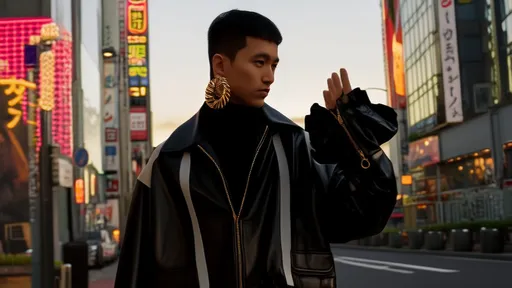
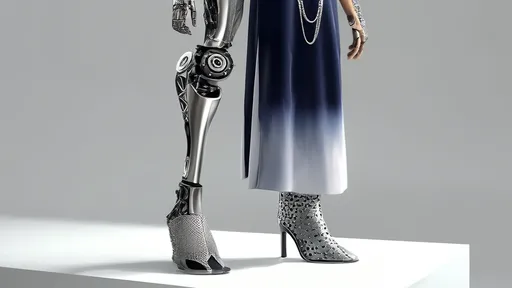
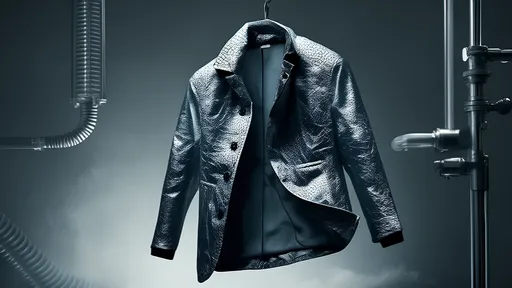
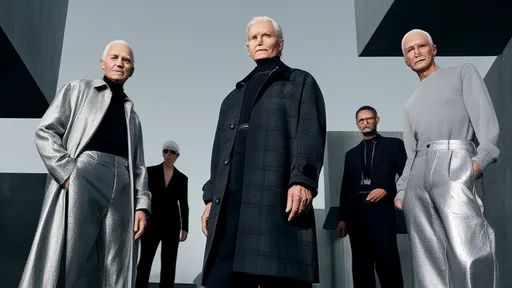
The fashion industry is undergoing a quiet revolution as gender-neutral dressing rooms inspire a wave of "transformative garments" – clothing designed to morph between multiple styles, fits, and silhouettes. What began as a practical solution for inclusive retail spaces has blossomed into a design movement challenging traditional notions of how clothing should function. These chameleon-like pieces don’t just blur gender lines; they obliterate the very idea that garments must have fixed forms or singular purposes.
At the heart of this trend lies a simple but radical proposition: what if one garment could serve as an entire wardrobe? Designers are engineering pieces with hidden seams, adjustable fastenings, and modular components that allow wearers to radically alter a garment’s shape. A single item might transform from tailored trousers to a flowing skirt, from structured blazer to drapey shawl, or from form-fitting dress to oversized tunic through strategic folding, twisting, or reconfiguration of fabric panels.
The movement gained momentum when major retailers began introducing gender-neutral changing areas, creating demand for versatile pieces that could appeal to all body types and style preferences. "Customers kept asking for items that could work multiple ways," explains Mariko Takahashi, head designer at avant-garde label Osmosis. "Suddenly we weren’t just making unisex clothes – we were creating shape-shifting canvases that adapt to the wearer’s needs in the moment."
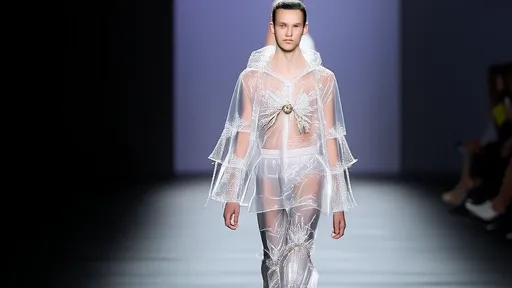
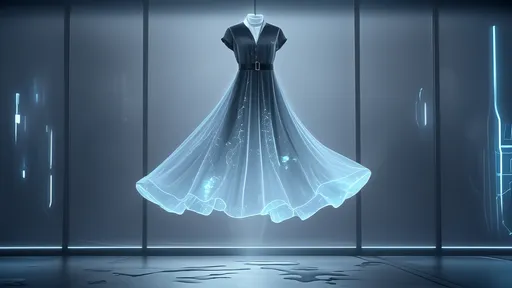
Technical innovations make these transformations possible. Designers employ magnetic closures instead of traditional buttons, creating invisible connection points throughout garments. Strategic pleating allows fabric to expand or contract dramatically. Some pieces incorporate hidden zippers that, when undone, release entirely new silhouettes. The most advanced examples use temperature-sensitive fabrics that change texture or transparency based on environmental conditions.
This isn’t merely about convenience or minimalism. Transformative clothing represents a philosophical shift in how we relate to our garments. "Fast fashion trained us to see clothes as disposable," notes sustainable style advocate Elijah Chen. "These pieces demand engagement – they’re puzzles to solve, relationships to cultivate. You’re not wearing the garment so much as collaborating with it."
The environmental implications are significant. A single transformative garment replacing multiple conventional items could dramatically reduce textile waste. Early adopters report their clothing purchases decreasing by 40-60% after investing in a capsule wardrobe of transformable pieces. Manufacturers are taking note, with several fast fashion brands racing to develop more affordable versions of these innovative designs.
Cultural resistance persists, particularly among consumers accustomed to traditional gendered fashion. Some critics dismiss the trend as impractical or gimmicky. "There’s a learning curve," admits transformable clothing wearer River Santiago. "The first time I tried to reconfigure my convertible dress into a jumpsuit, I looked like I’d been attacked by fabric. But once you learn the ‘language’ of a garment, it becomes second nature."
Retailers are responding to this challenge by offering in-store tutorials and augmented reality apps that demonstrate transformation techniques. High-end versions now include QR codes stitched into labels that link to video instructions for different styling options. This educational component has proven crucial for mainstream adoption.
The movement’s most profound impact may be on design education itself. Fashion schools are revising their curricula to emphasize engineering principles alongside traditional draping and pattern-making. Students learn to think in three dimensions, anticipating how a single piece of fabric might serve multiple functions. "We’re training designers to create clothing ecosystems rather than isolated pieces," says Parsons professor Dominique Laurent.
As the trend matures, questions arise about preservation and care. Museum conservators already struggle with how to archive these pieces – should they be preserved in one configuration or multiple? Dry cleaners report confusion about how to handle garments with complex construction. The industry is scrambling to develop new standards for these hybrid creations.
What began as a niche solution for gender-inclusive retail spaces has blossomed into one of fashion’s most exciting innovation frontiers. The transformable clothing movement challenges our most basic assumptions about garments: that they should have fixed forms, singular functions, or clear gender associations. In their place emerges a new paradigm where clothing becomes dynamic, participatory, and delightfully unpredictable.
The implications extend beyond fashion into broader cultural conversations about identity, sustainability, and consumption. In a world increasingly aware of fashion’s environmental toll and the limitations of rigid gender norms, transformable clothing offers a compelling vision for how we might dress – and express ourselves – in the years to come.

By /Aug 18, 2025

By /Aug 18, 2025

By /Aug 18, 2025
By /Aug 18, 2025
By /Aug 18, 2025

By /Aug 18, 2025

By /Aug 18, 2025
By /Aug 18, 2025

By /Aug 18, 2025

By /Aug 18, 2025
By /Aug 18, 2025
By /Aug 18, 2025
By /Aug 18, 2025

By /Aug 18, 2025

By /Aug 18, 2025
By /Aug 18, 2025
By /Aug 18, 2025
By /Aug 18, 2025
By /Aug 18, 2025
By /Aug 18, 2025
