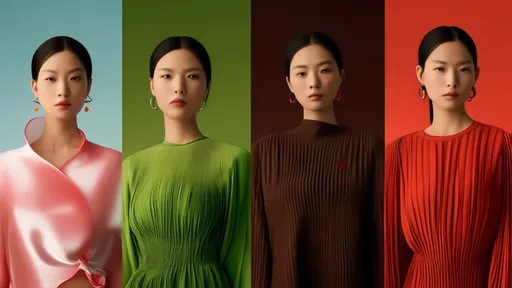
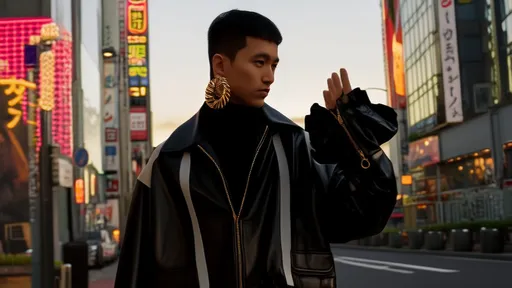
In the bustling streets of Tokyo’s Harajuku district, a new frontier of self-expression is emerging—one that doesn’t rely on bold visuals or striking silhouettes but instead hinges on something far more subtle: sound. A growing subculture of Japanese fashion enthusiasts is redefining personal style through what they call "auditory fashion," where the rustle of fabric, the crunch of textures, and even the rhythmic swish of clothing become as integral to an outfit as its color or cut. This movement isn’t just about aesthetics; it’s a sensory revolution, blending fashion, technology, and an almost meditative attention to the sounds we make as we move through the world.
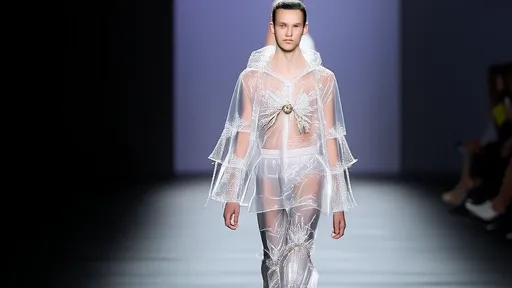
At the heart of this trend is a fascination with the sonic qualities of textiles. Designers and wearers alike are experimenting with fabrics that produce distinct frequencies when they interact—think the crisp snap of stiff linen, the whisper-soft glide of silk, or the percussive beat of layered taffeta. Some avant-garde creators have even begun embedding tiny microfibers or metallic threads into garments to alter their acoustic properties, crafting pieces that "sing" as the wearer walks. "It’s like composing music with your body," explains Rina Takemura, a Kyoto-based designer who recently debuted a collection of dresses that emit harmonic tones when brushed against the skin. "The wearer becomes both performer and audience."
The cultural roots of this phenomenon run deep. Japan has long celebrated the art of koto (listening), whether to the natural world or human-made environments. From the deliberate crunch of gravel in Zen gardens to the meticulous acoustics of traditional tea ceremonies, sound has always been a curated experience. Now, that sensibility is being applied to fashion. Young Tokyoites gather in soundproofed studios to record the friction between different fabrics, analyzing waveforms to create "sound palettes" for their wardrobes. Others share clips on social media with hashtags like #OtoFashion (Sound Fashion) or #MaterialFreq, turning everyday movements into viral ASMR content.
What makes this movement particularly compelling is its rejection of mass-produced uniformity. Unlike fast fashion’s reliance on visual trends, auditory fashion demands individuality—no two bodies will move exactly alike, meaning no two garments will sound identical. This has sparked collaborations between fashion houses and acoustic engineers, with some brands offering "sound tailoring" services where clients can customize the auditory profile of their clothing. "It’s the antithesis of silent, disposable fashion," says Haruo Ishikawa, a tech entrepreneur who developed an app that maps fabric sounds to musical notes. "When your coat hums in C-sharp, it’s undeniably yours."
Critics might dismiss this as another fleeting Tokyo eccentricity, but the numbers suggest otherwise. Sales of "high-frequency fabrics" (materials engineered for specific sonic effects) have tripled in Japan over the past two years, while sound-focused fashion workshops sell out within hours. Even corporate giants are taking notice: last spring, a major electronics company unveiled a line of headphones that sync with clothing sounds to create immersive "wearable soundtracks." Meanwhile, researchers at Osaka University are studying how auditory fashion could assist the visually impaired, using distinct textile sounds to convey color or texture information.
Perhaps the most poignant aspect of this trend is its emotional resonance. In interviews, adherents describe how the sound of a loved one’s jacket or the particular rustle of a childhood dress can evoke vivid memories—a concept psychologists call "sound-triggered nostalgia." By intentionally designing these auditory cues, wearers aren’t just crafting outfits; they’re composing the soundtrack of their lives. As twilight falls over Shibuya Crossing, the symphony of footsteps, rustling coats, and swaying skirts becomes a reminder: fashion isn’t just something we see. It’s something we hear, feel, and remember.

By /Aug 18, 2025

By /Aug 18, 2025

By /Aug 18, 2025
By /Aug 18, 2025

By /Aug 18, 2025

By /Aug 18, 2025

By /Aug 18, 2025
By /Aug 18, 2025

By /Aug 18, 2025

By /Aug 18, 2025
By /Aug 18, 2025
By /Aug 18, 2025
By /Aug 18, 2025

By /Aug 18, 2025

By /Aug 18, 2025
By /Aug 18, 2025

By /Aug 18, 2025
By /Aug 18, 2025
By /Aug 18, 2025

By /Aug 18, 2025
