The concept of retro-futurism has always been a fascinating intersection of nostalgia and forward-thinking design. But what happens when we apply 22nd-century predictive technology to recreate the iconic tailoring of the 1950s? This bold experiment in fashion archaeology is not just about revisiting the past—it’s about reimagining it through the lens of tomorrow’s tools.
The 1950s Silhouette: A Timeless Blueprint
The 1950s were a golden age of tailoring, defined by sharp lines, nipped waists, and an emphasis on structure. Designers like Christian Dior and Cristóbal Balenciaga revolutionized post-war fashion with their meticulous attention to form. The hourglass figure became a cultural obsession, and garments were engineered to perfection. Today, these designs are studied as much for their technical brilliance as for their aesthetic appeal.
But how would these designs evolve if they were conceived with access to 22nd-century predictive algorithms? Imagine a world where fabric technology could anticipate movement before it happens, or where stitching patterns could self-adjust based on biometric feedback. This isn’t just retro-futurism—it’s a dialogue between two eras separated by time but united by innovation.
The Predictive Tailoring Revolution
At the heart of this experiment lies a radical premise: using advanced predictive modeling to "reverse-engineer" 1950s designs with unprecedented accuracy. By analyzing thousands of archival patterns, photographs, and even social trends from the era, machine learning algorithms can now generate hyper-accurate recreations of vintage garments. But the real magic happens when these algorithms go beyond replication and start predicting how these designs might have evolved if mid-century designers had access to future tech.
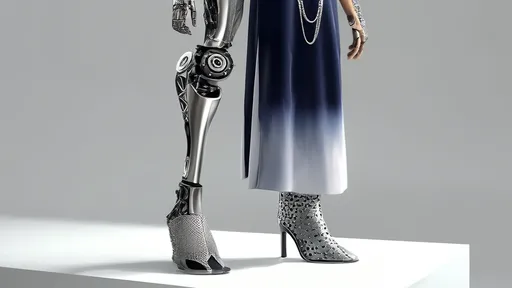
For instance, take the classic 1950s pencil skirt. Traditional versions relied on precise darting and seaming to create that iconic silhouette. A 22nd-century interpretation might use shape-memory alloys woven into the fabric itself, allowing the skirt to maintain its structure while offering unprecedented flexibility. The result? A garment that looks authentically 1950s but performs like something from a sci-fi novel.
Material Science Meets Nostalgia
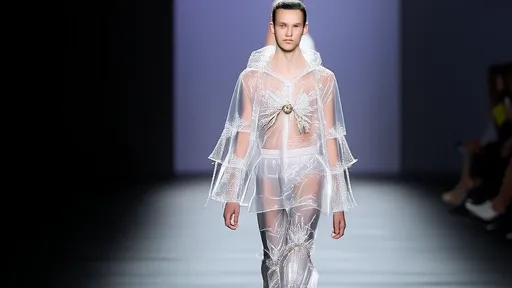
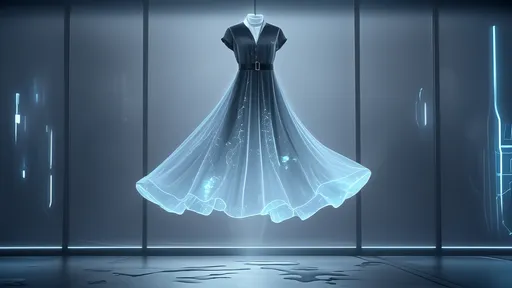
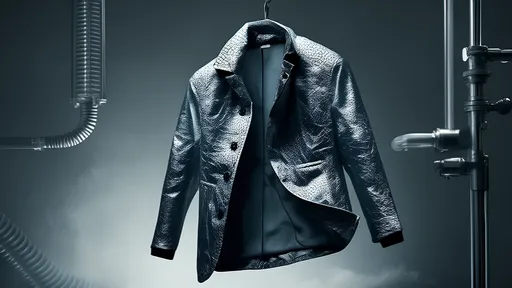
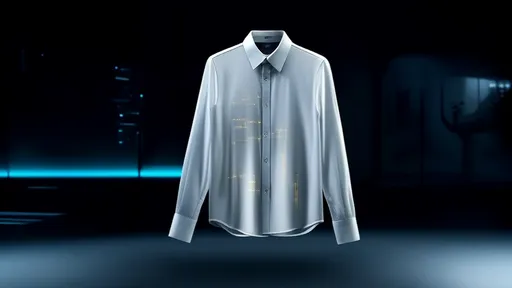
One of the most exciting aspects of this project is the fusion of vintage aesthetics with futuristic materials. Researchers are experimenting with nano-fibers that mimic the weight and drape of 1950s fabrics like wool crepe and taffeta, but with self-cleaning properties and adaptive thermal regulation. Imagine a Marilyn Monroe-style halter dress that adjusts its opacity based on sunlight exposure, or a menswear suit jacket that repels stains while maintaining that perfect period-accurate sheen.
These material innovations aren’t just gimmicks—they’re solving real problems that plagued 1950s fashion. The era’s reliance on heavy interfacing and restrictive undergarments often came at the cost of comfort. By reengineering these garments with smart textiles, we’re preserving the visual language of the past while eliminating its practical drawbacks.
The Cultural Implications
This project raises profound questions about how we engage with fashion history. Are we creating authentic reproductions, or something entirely new? The answer might lie in between. By using future technology to reexamine past designs, we’re not just paying homage—we’re creating a new hybrid aesthetic that speaks to both eras simultaneously.
Early adopters of these designs report an uncanny emotional response. Wearing what looks like a perfectly preserved 1950s outfit—but with hidden technological enhancements—creates a unique cognitive dissonance. It’s as if the wearer becomes a time traveler, embodying both the optimism of the post-war boom and the limitless potential of the future.
The Future of Fashion Archaeology
As this technology develops, its applications could extend far beyond the 1950s. Every fashion era has its own technical challenges and innovations waiting to be reimagined. The Victorian era’s corsetry could be reinvented with responsive pressure sensors. The psychedelic prints of the 1960s might incorporate nano-scale color-shifting pigments. The possibilities are as endless as fashion history itself.
What makes this project particularly compelling is its refusal to treat retro-futurism as mere pastiche. By applying serious technological resources to historical fashion, we’re creating something that honors the craftsmanship of the past while pushing the boundaries of what clothing can be. It’s not about nostalgia—it’s about evolution.
The marriage of 22nd-century predictive technology with 1950s tailoring represents more than just a stylistic experiment. It’s a testament to fashion’s enduring power to bridge time periods, technologies, and cultural moments. As these prototypes move from lab to runway, one thing becomes clear: the future of vintage isn’t about looking backward—it’s about moving forward while carrying the best of the past with us.

By /Aug 18, 2025

By /Aug 18, 2025

By /Aug 18, 2025

By /Aug 18, 2025

By /Aug 18, 2025

By /Aug 18, 2025

By /Aug 18, 2025
By /Aug 18, 2025

By /Aug 18, 2025
By /Aug 18, 2025
By /Aug 18, 2025
By /Aug 18, 2025
By /Aug 18, 2025

By /Aug 18, 2025

By /Aug 18, 2025
By /Aug 18, 2025

By /Aug 18, 2025

By /Aug 18, 2025
By /Aug 18, 2025

By /Aug 18, 2025
