Fashion Pioneers with Disabilities: How Wearable Prosthetics Become New Accessories on Haute Couture Runways?

Aug 18, 2025 By

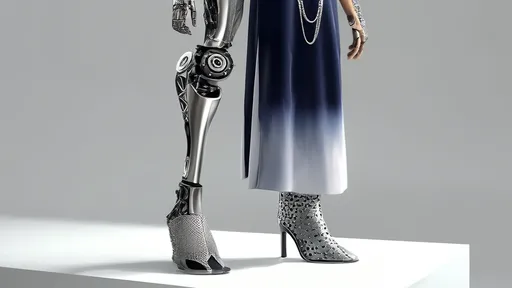
The world of high fashion has always been a realm of boundless creativity, where designers push the limits of aesthetics and functionality. In recent years, a revolutionary trend has emerged on the runways: wearable prosthetics as haute couture accessories. No longer confined to the realm of medical necessity, prosthetic limbs are being reimagined as bold fashion statements, challenging societal norms and redefining beauty standards.


At the forefront of this movement are disabled models and designers who are transforming the industry from within. These pioneers are not just participating in fashion—they are reshaping it. Take, for example, the groundbreaking work of designer Sophie de Oliveira Barata, whose Alternative Limb Project has blurred the lines between art, technology, and fashion. Her bespoke prosthetic limbs, adorned with intricate designs ranging from floral patterns to futuristic metallic finishes, have graced international runways and magazine covers alike.


The shift toward prosthetic fashion represents more than just aesthetic innovation—it signals a profound cultural change. For decades, disability was largely invisible in the fashion world, with mainstream brands rarely considering adaptive clothing or inclusive designs. Today, major fashion houses are collaborating with disabled artists to create pieces that celebrate rather than conceal physical differences. This movement goes beyond mere representation; it's about empowerment and self-expression.


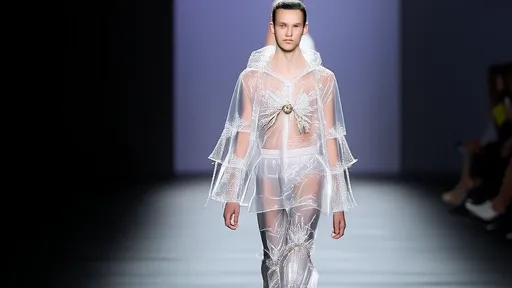
London Fashion Week has become a particular hotspot for this revolution. In recent seasons, models wearing elaborate prosthetic designs have commanded attention on some of the most prestigious runways. These aren't subtle, skin-toned replicas of human limbs, but vibrant, artistic creations that demand to be seen. Some resemble works of sculpture, with geometric patterns and unconventional materials, while others incorporate cutting-edge technology like LED lighting or interactive elements.


The response from the fashion industry has been overwhelmingly positive. Influential editors and buyers have praised these designs not as niche curiosities, but as legitimate and exciting contributions to high fashion. What began as a statement about inclusion has evolved into a recognized art form with its own aesthetic vocabulary. Designers report that these pieces often receive more attention and admiration than traditional accessories at fashion shows.


Beyond the runway, this movement is having a tangible impact on how society views disability. Young people growing up with limb differences now have visible role models in fashion—an industry that has historically represented an unattainable standard of perfection. Social media has amplified this effect, with hashtags like #DisabilityFashion and #ProstheticPride creating communities where individuals can share their style and inspire others.


Technological advancements have played a crucial role in this evolution. Modern prosthetics are lighter, more customizable, and more comfortable than ever before, making fashion-forward designs practical for everyday wear. 3D printing technology has been particularly transformative, allowing for intricate, personalized designs at relatively affordable prices. Some designers are even creating interchangeable covers, allowing wearers to match their prosthetics to different outfits like any other accessory.


The business potential of this market is just beginning to be realized. While adaptive clothing has existed for years, the concept of prosthetics as fashion items opens up new commercial possibilities. Several startups have emerged specializing in designer prosthetic covers, while established brands are exploring partnerships with disability advocates. The message is clear: disability and high fashion are not mutually exclusive—they can coexist beautifully.


Critics might argue that focusing on aesthetics trivializes the functional importance of prosthetics. However, proponents counter that fashion provides an opportunity to reclaim agency over one's body. For many wearers, choosing a visually striking prosthetic is an act of empowerment—a declaration that their difference is not something to hide but to celebrate. This perspective aligns with broader movements toward body positivity and self-acceptance.


Looking ahead, the influence of prosthetic fashion seems poised to grow. More design schools are incorporating adaptive design into their curricula, ensuring the next generation of creators considers accessibility from the outset. Fashion magazines increasingly feature models with visible disabilities, normalizing diversity in beauty standards. Perhaps most importantly, conversations about inclusion are moving from the periphery to the center of the industry's consciousness.


The rise of prosthetics as fashion accessories represents more than just a trend—it's a fundamental shift in how we conceive of beauty, functionality, and identity. By embracing difference rather than masking it, the fashion world is sending a powerful message: that true style knows no limits, and that innovation often comes from challenging conventional wisdom. As this movement continues to gain momentum, it promises to make the industry—and society at large—more inclusive, creative, and authentic.



Recommend Posts
Style

Unisex Locker Rooms Inspire Transformative Clothing": 72 Ways to Wear One Outfit

By /Aug 18, 2025

The fashion industry is undergoing a quiet revolution as gender-neutral dressing rooms inspire a wave of "transformative garments" – clothing designed to morph between multiple styles, fits, and silhouettes. What began as a practical solution for inclusive retail spaces has blossomed into a design movement challenging traditional notions of how clothing should function. These chameleon-like pieces don’t just blur gender lines; they obliterate the very idea that garments must have fixed forms or singular purposes.
Style

Mood Visualization Suit: A互助 Dress That Changes Color Based on Brainwaves for Depression Support

By /Aug 18, 2025

In a groundbreaking fusion of fashion and neurotechnology, a team of designers and neuroscientists has unveiled an innovative garment designed to support individuals living with depression. The "Mood Visualizing Dress" is a wearable piece of technology that changes color based on the wearer's brainwave activity, offering a unique form of emotional expression and interpersonal connection.
Style

How Does Your Body Odor Determine Custom Perfume Formulas?

By /Aug 18, 2025

In the evolving world of personalized fragrance, a groundbreaking approach is emerging that goes beyond traditional scent profiling. The concept of olfactory identity authentication – using your unique body odor as the foundation for bespoke perfumery – is rewriting the rules of customization. This intimate interplay between biology and artistry creates fragrances that don't just smell pleasant, but smell unmistakably like you.
Style

Synesthesia-Inspired Art: Wearing the Flavors of Sweet, Sour, Bitter, and Spicy

By /Aug 18, 2025

In a world where sensory experiences often remain distinct, a growing community of synesthetes is blurring the lines between taste and vision. These individuals—known as taste-visual synesthetes—experience flavors as colors, textures, and even patterns. For them, the tang of lemon isn’t just sour; it might manifest as a burst of vibrant yellow or a jagged, electric shape. This unique neurological phenomenon has inspired an avant-garde movement in fashion: wearable art that translates the essence of sweet, sour, bitter, and spicy into tangible, visual designs.
Style

Load-bearing Fashion: Why Parisian It Girls Are Wearing Gravity Calculators?"

By /Aug 18, 2025

In the labyrinth of Parisian fashion, where trends are born and reborn with the changing seasons, a curious new accessory has begun to surface on the wrists of the city’s most influential it girls. No, it’s not another minimalist bracelet or a vintage watch—it’s a gravity calculator. At first glance, the device seems more at home in a physics lab than on the arm of a style icon, yet its sudden prominence speaks volumes about the evolving relationship between fashion, functionality, and the unspoken rules of dressing.
Style

The 'Skin as Fashion' Movement: A Social Experiment Report on 2025 Bare-Skin Travelers"

By /Aug 18, 2025

The morning rush hour in downtown Manhattan looked strikingly different on June 1st, 2025. As office workers emerged from subway stations and taxis, something was missing - the usual sea of business suits, dresses, and casual wear had been replaced by bare skin. This marked the launch of the controversial "Skin as Garment" movement's most ambitious social experiment to date.
Style

Grandmother's Wardrobe Archaeology: How to Authenticate Vintage Items Using Carbon-14 Dating"

By /Aug 18, 2025

The musty scent of mothballs and the whisper of silk against satin – opening a grandmother's wardrobe feels like cracking open a time capsule. For vintage fashion collectors and historians alike, determining whether that Chanel bouclé jacket is a 1960s treasure or a clever replica has long relied on subjective expertise. But what if science could settle the debate? Carbon-14 dating, a technique typically reserved for archaeological artifacts, is now being deployed as the ultimate authentication tool for mid-century couture.
Style

Edible Fashion: Milan Runway Models Eat Sugar Glass Coats While Walking

By /Aug 18, 2025

The Milan Fashion Week runway has always been a stage for the avant-garde, but this season, it served up something even more unexpected—edible fashion. Among the most talked-about pieces was a stunning sugar glass coat, worn by models who casually nibbled on it as they strutted down the catwalk. The audacious creation blurred the lines between fashion and food, leaving audiences both bewildered and captivated.
Style

The Vanishing Color: The Most Expensive Item in 2025 Is This Pure White, Undyed Linen Robe

By /Aug 18, 2025

In the ever-evolving landscape of fashion, where trends come and go with the seasons, a surprising contender has emerged as the most coveted item of 2025: the undyed, pure white linen robe. This seemingly simple garment has captured the imagination of designers, influencers, and consumers alike, becoming a symbol of both luxury and sustainability in an industry often criticized for its excesses.
Style

Fashion Time Bank: A New Model for Storing Style Inspirations and Exchanging for Physical Items

By /Aug 18, 2025

In an era where fast fashion dominates and personal style often feels disposable, a revolutionary new concept is emerging in the fashion world: the Time Bank for Fashion. This innovative model allows fashion enthusiasts to "deposit" their styling ideas and creative outfit combinations, earning credits that can later be redeemed for actual clothing items. It's a system that values creativity as currency and rewards sartorial imagination.
Style

The Instant Fashion" Paradox: The Philosophy Behind the 24-Hour Degradable Dress

By /Aug 18, 2025

The fashion industry stands at a peculiar crossroads where sustainability collides with our insatiable appetite for novelty. Enter the 24-hour degradable dress - a garment designed to literally disappear after one day's wear. This radical concept embodies what scholars are calling the "instant fashion" paradox, where ephemerality becomes both the problem and proposed solution to fashion's environmental crisis.
Style

Aural Fashion: Defining Personal Style with Fabric Friction Sounds in Japan"

By /Aug 18, 2025

In the bustling streets of Tokyo’s Harajuku district, a new frontier of self-expression is emerging—one that doesn’t rely on bold visuals or striking silhouettes but instead hinges on something far more subtle: sound. A growing subculture of Japanese fashion enthusiasts is redefining personal style through what they call "auditory fashion," where the rustle of fabric, the crunch of textures, and even the rhythmic swish of clothing become as integral to an outfit as its color or cut. This movement isn’t just about aesthetics; it’s a sensory revolution, blending fashion, technology, and an almost meditative attention to the sounds we make as we move through the world.
Style

Fashion Pioneers with Disabilities: How Wearable Prosthetics Become New Accessories on Haute Couture Runways?

By /Aug 18, 2025

The world of high fashion has always been a realm of boundless creativity, where designers push the limits of aesthetics and functionality. In recent years, a revolutionary trend has emerged on the runways: wearable prosthetics as haute couture accessories. No longer confined to the realm of medical necessity, prosthetic limbs are being reimagined as bold fashion statements, challenging societal norms and redefining beauty standards.
Style

Tactile Social Etiquette: Why Saying 'Exchange Cuff Fabrics' Instead of Handshakes by 2025?

By /Aug 18, 2025

In the ever-evolving landscape of social etiquette, the year 2025 marks a subtle but significant shift in how we greet one another. The traditional handshake, once the cornerstone of professional and personal introductions, is gradually being replaced by a more tactile and intimate gesture: the exchange of sleeve fabrics. This emerging trend speaks volumes about our changing relationship with physical contact, hygiene, and the unspoken language of textiles.
Style

Retrofuturism Revisited: Replicating 1950s Tailoring with 22nd Century Predictive Technology

By /Aug 18, 2025

The concept of retro-futurism has always been a fascinating intersection of nostalgia and forward-thinking design. But what happens when we apply 22nd-century predictive technology to recreate the iconic tailoring of the 1950s? This bold experiment in fashion archaeology is not just about revisiting the past—it’s about reimagining it through the lens of tomorrow’s tools.
Style

Slow Fashion" Movement: A Memory Metal Coat That Takes Three Months to Transform

By /Aug 18, 2025

In an era where instant gratification dominates consumer culture, a team of material scientists and fashion designers has unveiled a radical concept that challenges our very perception of time and technology. Dubbed the "Slow Morph" movement, their groundbreaking memory metal jacket requires a full three months to complete its transformation, creating what may be the world's first garment that evolves at the speed of biological growth rather than digital immediacy.
Style

Senior Model Alliance Manifesto: Why Did Balenciaga AW25 Feature Models Over 80 Years Old?

By /Aug 18, 2025

The fashion world stood still when Balenciaga unveiled its Autumn/Winter 2025 collection with a radical casting choice: an entire runway show featuring models aged 80 and above. This wasn't merely a token inclusion of one or two silver-haired models—it was a full-scale embrace of octogenarian beauty, executed with the same precision and audacity that has defined the house since Demna took the reins. The move sent shockwaves through an industry still clinging to youth-centric ideals, but for those familiar with the Senior Models Union's manifesto, it felt less like a provocation and more like an inevitability.
Style

Period Red" Campaign: Blood-Colored Dresses Take Over Four Major Fashion Weeks

By /Aug 18, 2025

The fashion world has long been a stage for social commentary, but few movements have bled into the industry as vividly as the recent "Period Red" revolution. What began as a grassroots campaign to destigmatize menstruation has now strutted onto the runways of all four major fashion weeks, leaving a trail of crimson silk and satin in its wake.
Style

The Era of Air Fiber: A 0.3g Shirt Priced at $3000

By /Aug 18, 2025

In an era where fashion intersects with cutting-edge technology, a groundbreaking innovation has emerged that challenges conventional notions of textile design. The Air Fiber Era has arrived, and its latest marvel—a shirt weighing a mere 0.3 grams with a staggering price tag of $3,000—has left the industry both awestruck and divided. This ultra-lightweight garment represents not just a sartorial statement but a radical leap in material science, blurring the lines between clothing, engineering, and avant-garde artistry.
Style

The 10-Piece Wardrobe Challenge: A Guide to the Minimalist Clothing Practice Embraced by Silicon Valley Elites"

By /Aug 18, 2025

In the heart of Silicon Valley, where innovation meets minimalism, a new trend is quietly reshaping how tech elites approach their daily attire. The "10-Item Wardrobe Challenge" has emerged as more than just a fashion statement—it’s a philosophy of intentional living. What began as an experiment in reducing decision fatigue has evolved into a movement embraced by CEOs, engineers, and venture capitalists who swear by the mental clarity it brings.