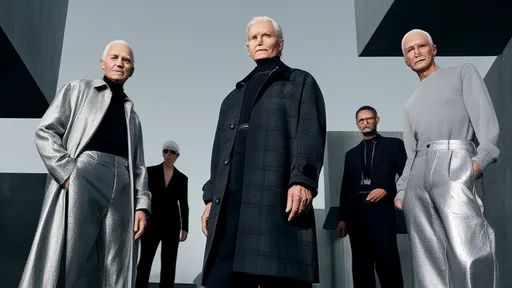
The fashion world stood still when Balenciaga unveiled its Autumn/Winter 2025 collection with a radical casting choice: an entire runway show featuring models aged 80 and above. This wasn't merely a token inclusion of one or two silver-haired models—it was a full-scale embrace of octogenarian beauty, executed with the same precision and audacity that has defined the house since Demna took the reins. The move sent shockwaves through an industry still clinging to youth-centric ideals, but for those familiar with the Senior Models Union's manifesto, it felt less like a provocation and more like an inevitability.
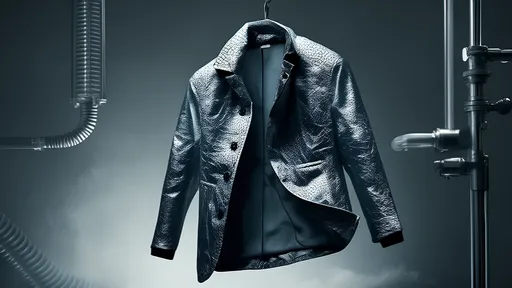
Backstage, the atmosphere crackled with a quiet intensity. These weren't novices being primped and preened; these were women who had lived entire lifetimes before ever setting foot on a catwalk. Their hands, marked by time, adjusted the architectural silhouettes of Demna's designs with the same care one might use to straighten a grandchild's collar. The collection itself—a masterclass in texture and proportion—seemed to gain deeper resonance when worn by those who understood the weight of history. Leather trenches that might have looked severe on younger models took on the quality of well-worn memoirs; voluminous knits became tangible manifestations of accumulated wisdom.
Fashion journalists initially scrambled to frame this as a "statement," but the truth proved more nuanced. Balenciaga's creative team had been quietly workshopping this concept since attending a lecture by the Senior Models Union two years prior. Their manifesto—a blistering critique of ageism in fashion—argued that true innovation couldn't exist while excluding 30% of the population from representation. What began as theoretical discussions in the atelier gradually crystallized into the fully realized vision now striding down the runway. This wasn't virtue signaling; it was the logical endpoint of Demna's ongoing deconstruction of fashion's tired norms.
The cultural ramifications extended far beyond the show's immediate spectacle. Within hours, luxury conglomerates found their inboxes flooded with requests from clients in their 70s and 80s—demographics previously assumed to have "aged out" of high fashion. Department stores reported a 220% spike in inquiries about personal shoppers specializing in mature clients. Perhaps most telling was the reaction from younger generations; Gen Z consumers, typically dismissive of traditional luxury marketing, engaged with Balenciaga's campaign at unprecedented rates. The message was clear: authenticity transcends age, and true style is timeless.
Critics expecting gimmickry were disarmed by the collection's technical brilliance. Each garment had been subtly re-engineered to flatter mature physiques without compromising the house's avant-garde ethos. Seam placements followed natural posture lines rather than idealized proportions; weighted hems provided elegant drape for slower gaits. These weren't adaptations so much as revelations—proof that innovative design could honor the human form at every life stage. The fashion press, so often obsessed with "disruption," found itself confronted with something far more radical: respect.
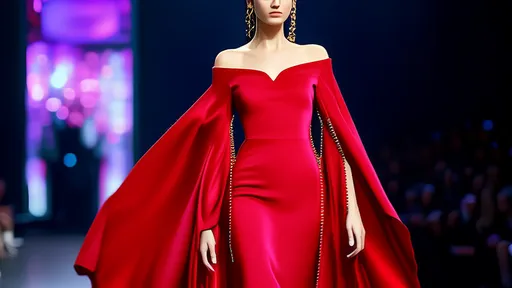
As the final model—91-year-old former ballerina Yvette Moreau—paused in a liquid mercury gown that seemed to capture every studio light, the audience grasped the deeper narrative. This show wasn't about age as a novelty or cause. It was about time itself as the ultimate luxury. In an era of fast fashion and faster trends, Balenciaga had dared to suggest that true elegance isn't about chasing youth, but about carrying one's history with unapologetic grace. The standing ovation lasted nine minutes—one for each decade represented on the runway.
Industry analysts predict this moment will divide fashion history into pre- and post-AW25 eras. Already, competing houses are scrambling to assemble their own mature model rosters, though few possess Balenciaga's nuanced understanding of the Senior Models Union's philosophy. What began as a single collection may well catalyze the most significant shift in beauty standards since the rise of diversity movements. For the octogenarian models now fielding offers from Milan to Tokyo, the revolution feels overdue. As Moreau told Vogue while adjusting her Balenciaga nameplate necklace: "We didn't need permission to be beautiful. The world just needed reminding."

By /Aug 18, 2025

By /Aug 18, 2025

By /Aug 18, 2025
By /Aug 18, 2025

By /Aug 18, 2025

By /Aug 18, 2025

By /Aug 18, 2025
By /Aug 18, 2025

By /Aug 18, 2025

By /Aug 18, 2025

By /Aug 18, 2025
By /Aug 18, 2025
By /Aug 18, 2025

By /Aug 18, 2025

By /Aug 18, 2025
By /Aug 18, 2025
By /Aug 18, 2025
By /Aug 18, 2025

By /Aug 18, 2025
By /Aug 18, 2025
