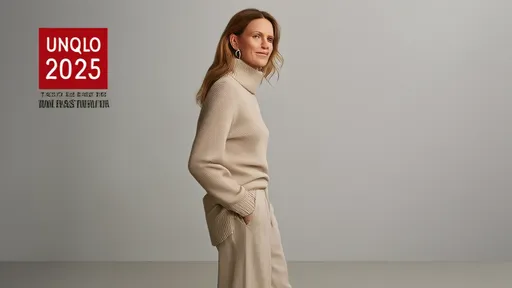
In an industry often criticized for its environmental impact and labor practices, the recent collaboration between Oscar-winning actress Cate Blanchett and Japanese apparel giant Uniqlo stands as a remarkable statement of intent. The partnership, announced earlier this month, transcends the typical celebrity endorsement deal, positioning itself as a vehicle for meaningful social progress rather than mere commercial gain.
Blanchett, known for her sophisticated style both on and off the red carpet, has consistently used her platform to advocate for environmental causes and social justice. Her decision to partner with Uniqlo—specifically with their innovative Re.Uniqlo recycling initiative—represents a natural extension of her longstanding activism. During the launch event in Tokyo, the actress explained that her involvement stemmed from a shared vision with the company's leadership about fashion's potential role in addressing global challenges.
"This isn't about creating another collection for people to consume," Blanchett emphasized to assembled journalists. "It's about starting conversations, changing behaviors, and demonstrating that the fashion industry can be part of the solution rather than the problem. We're looking at the entire lifecycle of clothing—from sustainable production methods to encouraging recycling and reuse."
The collaboration centers on Uniqlo's innovative Re.Uniqlo program, which encourages customers to return their used Uniqlo clothing to stores for recycling or repurposing. Blanchett will serve as the global ambassador for this initiative, appearing in campaigns that educate consumers about textile waste and the importance of circular fashion economies. Unlike traditional fashion partnerships that focus primarily on selling new products, this collaboration emphasizes reducing consumption and extending the life of existing garments.
Industry analysts have noted the significance of a Hollywood star of Blanchett's caliber aligning herself with a recycling initiative rather than a luxury product launch. Her involvement lends considerable prestige to the often-unglamorous concept of clothing recycling, potentially making sustainable practices more appealing to mainstream consumers who might otherwise view them as inconvenient or unimportant.
Uniqlo's parent company, Fast Retailing, has faced criticism in the past regarding its environmental footprint and labor practices in its supply chain. The partnership with Blanchett appears to be part of a broader corporate strategy to address these concerns more transparently and aggressively. Company representatives stated that Blanchett's rigorous standards and advocacy experience were precisely what attracted them to the collaboration, as they seek to implement more substantial sustainability measures throughout their operations.
Beyond the recycling initiative, the partnership will include educational components aimed at both Uniqlo employees and customers. Blanchett has committed to participating in workshops and creating digital content that explains the environmental impact of fashion choices and provides practical advice for more sustainable consumption. These materials will be distributed globally through Uniqlo's extensive retail network and digital platforms.
The actress has also influenced the company's internal policies, advocating for improved transparency in supply chain reporting and pushing for more ambitious targets in reducing water consumption and carbon emissions. While Uniqlo had already established some sustainability goals before this partnership, Blanchett's involvement appears to have accelerated and expanded these commitments.
Consumer response to the announcement has been largely positive, particularly among younger demographics who increasingly prioritize sustainability when making purchasing decisions. Social media metrics indicate significantly higher engagement with Uniqlo's sustainability messaging since the partnership was revealed, suggesting that Blanchett's involvement has successfully drawn attention to these issues.
However, some environmental advocates have expressed cautious optimism, noting that true progress will require substantive changes to Uniqlo's business model rather than just promotional campaigns. They emphasize that while celebrity endorsements can raise awareness, the fashion industry's environmental problems demand systemic solutions that address overproduction, material choices, and waste management throughout the entire supply chain.
Blanchett acknowledges these concerns, stating that she approached the partnership with healthy skepticism and conducted due diligence on Uniqlo's practices before agreeing to the collaboration. She describes her role as both an ambassador and a critical voice within the organization, committed to holding the company accountable to its stated goals.
The partnership represents a growing trend of celebrities leveraging their influence to drive corporate responsibility, particularly in industries with significant environmental and social impacts. Unlike simple endorsements, these deeper collaborations allow public figures to actively shape company policies and initiatives rather than merely lending their image to pre-existing campaigns.
As fast fashion continues to face scrutiny for its environmental consequences, the Blanchett-Uniqlo partnership offers an alternative model for how major apparel companies might evolve. By focusing on recycling, education, and transparency, the collaboration attempts to address fashion's sustainability challenges without abandoning the accessibility and affordability that define brands like Uniqlo.
The success of this initiative will ultimately be measured not by sales figures or media coverage, but by its tangible impact on consumer behavior and Uniqlo's environmental performance. If successful, it could establish a new template for celebrity-brand partnerships—one where social progress takes precedence over commercial objectives.
As Blanchett noted in her closing remarks at the launch event, "Real change requires us to rethink everything about how we produce and consume fashion. This partnership isn't a solution in itself, but it's a step toward building a industry that respects both people and the planet."
The fashion world will be watching closely as this unconventional collaboration unfolds, potentially signaling a shift in how celebrities and corporations approach their social responsibilities in an increasingly conscious marketplace.
By /Aug 22, 2025
By /Aug 22, 2025

By /Aug 22, 2025

By /Aug 22, 2025
By /Aug 22, 2025

By /Aug 22, 2025

By /Aug 22, 2025
By /Aug 22, 2025
By /Aug 22, 2025
By /Aug 22, 2025
By /Aug 22, 2025

By /Aug 22, 2025

By /Aug 22, 2025
By /Aug 22, 2025

By /Aug 22, 2025

By /Aug 22, 2025

By /Aug 22, 2025

By /Aug 22, 2025
By /Aug 22, 2025

By /Aug 22, 2025
